


Is This Europe’s Most Overlooked Dividend Stock?

It has raised its dividend for thirty years straight, has low debt, and pays 5.9% a year. Yet it’s valued like a bank in trouble. And the founders have just decided to give up control. Is this a reward for patience, or a trap?
Key points
The company has raised its dividend for thirty years straight, yet trades at a P/E of 10.9 and pays 5.9% a year.
The pace of dividend increases plunged after 2021, from double digits to just 2% a year.
The founders are giving up full control of the company and will receive 12.7 million new shares in return.
First-half profit grew by 17%, but operating cash flow fell over the same period.
Four decisions will be made by March 11, 2027, determining whether the dividend-growth streak survives.
5.9% a year from a company no one knows
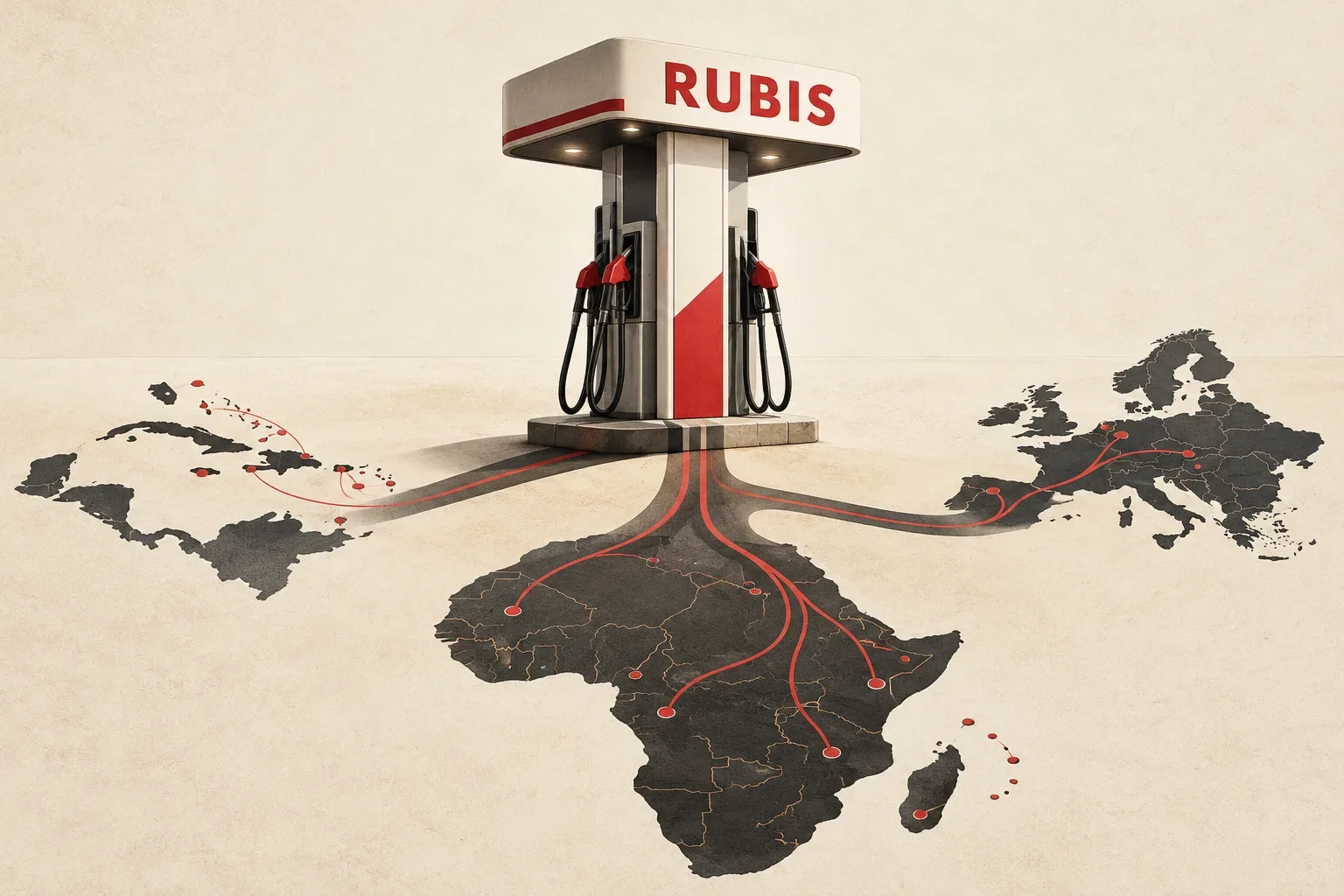
Rubis $RUI.PA is a Paris-based company that does what the big oil majors no longer want to do: it operates more than a thousand gas stations and delivers LPG and asphalt across around 45 countries in Africa, the Caribbean, and Europe. Where Shell or TotalEnergies are gradually pulling out, Rubis steps in and often ranks among the three biggest players in the country. It is also building solar farms in France.
The market consistently overlooks it, and there are three reasons why. Its market cap of EUR 3.7 billion is too small for large funds. Fuel distribution is a “dirty” sector, and emerging markets seem risky. And until now, the company had been structured as a limited partnership in which the founders, with just a few percent of the shares, had a say in everything—something institutional investors don’t like.
The result: the stock trades at EUR 35.28, a P/E of 10.9, and a dividend yield of 5.9%. That’s how troubled banks are valued, not a company that reported record profit for 2025. The stock is up 11.9% over the past year and 77.8% over three years, but it is still below its 52-week high of EUR 37.08.