


Uber Has More Customers Than It Can Serve. Why Is the Stock Near Its Yearly Low?

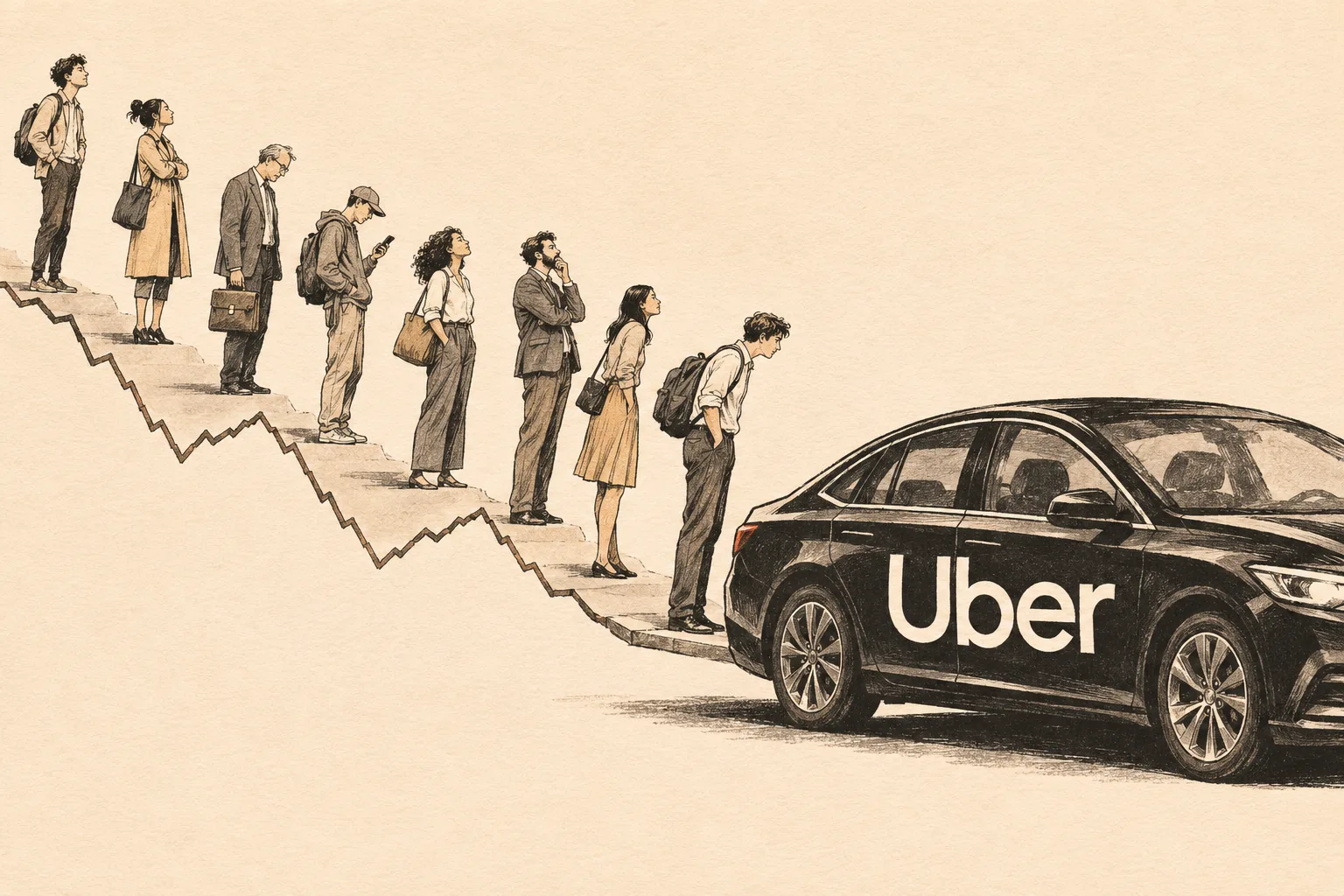
The market sent Uber to a yearly low out of fear that robotaxis will take away its business. The results revealed a different problem: the company is short on drivers. And the very thing investors fear is also the only thing that could solve it.
Key points
Uber stock hit a yearly low a week before earnings, while the S&P 500 index gained 9.4% over the year
The results revealed a problem unrelated to robotaxis that the market completely overlooked in its fears
Khosrowshahi bought roughly 10 million USD worth of shares in September, his first open-market purchase since 2022
A segment that barely gets mentioned on investor forums is now as large as rides and is growing faster
The consensus target price of 105 USD and the Bulios fair value of 66.35 USD tell two conflicting stories about Uber
At the bottom a week before earnings
Uber Technologies $UBER had an unusual autumn. On October 28, a week before earnings were released, its stock fell to a 52-week low. It lost 25.3% over the year, while the S&P 500 index gained 9.4% over the same period. That is a drop of more than 30% from the top of its 52-week range, 95.18 USD, for a company growing 20% annually and generating record cash.
The reason isn’t the company’s numbers, but the competition. According to Semafor, Waymo plans to expand its robotaxi fleet from roughly 4,000 vehicles to 8,000 by the end of 2026 and 20,000 by the end of 2027. Meanwhile, Tesla is rolling out its own service. The market interpreted this simply: once cars can drive themselves, Uber won’t be needed.
The company’s leadership sees it differently. CEO Dara Khosrowshahi bought roughly 10 million USD worth of shares in September, his first open-market purchase since 2022. Third-quarter results sent the stock up 4.9% on November 4 to 69.87 USD, but the next day it slipped back to 68.78 USD. The market still hasn’t made up its mind, and for good reason: the results showed that Uber’s biggest constraint today isn’t robots, but people.