


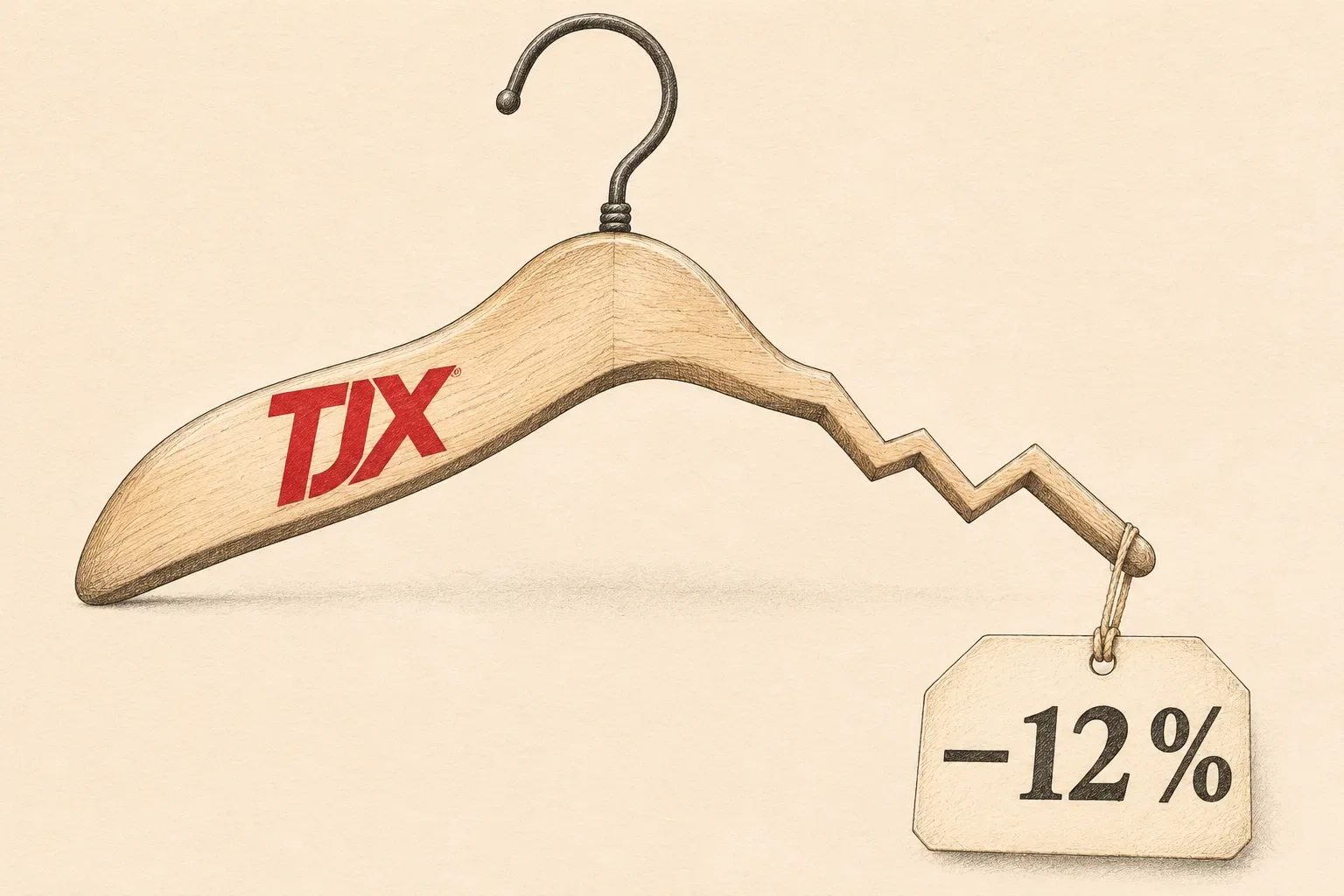
This is where Americans shop when everything is getting more expensive. So why is the stock down 12% this year?

Americans go to TJ Maxx when they can't afford full price at a traditional department store. Wholesale prices in the US are now at their highest since 2022, yet shares of the chain's owner have fallen 12.5% since January. It reports on Wednesday, and two analysts have already cut their price targets.
Key points
Wholesale prices in the US are at their highest since 2022, but shares of the chain that thrives on high prices are down 12.5%.
August's results included one percentage point that most headlines skipped over.
TJX's US stores grew by 1%, Europe and HomeGoods by 7%, and it's all one and the same company.
Inflation isn't making the company's goods more expensive; the impact is coming from elsewhere, and the CFO put a figure on it down to a tenth of a point.
Bulios puts fair value at $132, analysts' highest target is $198, and results are due Wednesday.
The store people go to when money is running out
TJ Maxx and Marshalls are where Americans go when they see a price tag at a department store they can't afford: the same brands, just 20 to 60% cheaper. Their owner, TJX Companies $TJX , has built a network of 5,285 stores in ten countries and annual sales of more than $62 billion. Whenever America has become more expensive, it has brought the company new customers.
And America is now more expensive than at any time in the past four years. Wholesale prices jumped 6.5% year over year in October, the biggest increase since 2022, and the market expects the Fed to raise rates in December. These are exactly the kinds of moments when TJX is described as a stock that thrives on high prices.
But the market is behaving in precisely the opposite way. Shares are down 12.5% since the start of the year and 8% over the past year, while the S&P 500 index gained 12% over the same period. And on Friday, five days before Wednesday's results, two analyst firms cut their price targets and one stopped recommending the stock altogether.
So the best retailer for hard times isn't making money just when hard times have arrived. This is neither a coincidence nor a market mood. The answer is hidden in a single number from the last results that most headlines skipped over: the 1% at the US stores.