Rate hikes are over, leading economists think. What does that mean?

Economists predict the Fed will raise rates by another quarter percentage point to bring inflation under control this spring. There would be nothing so special about that. That's probably what everyone expects. But then, they say, the hikes will stop for good. What would that mean?

The Fed will end rate hikes, according to many.
Rates are already the highest they have been in 15 years, having risen gradually from near-zero levels a year ago to 5%. The Fed has cited persistent inflation in making its decision and has already hinted that it may allow one more hike before it levels off.

Rates are at historically high levels. Source
At an event in Washington D.C. Kathy Bostjancic, Nationwide Bank's chief economist, said, "The expectation at the moment is that rates will rise: "One more rate hike makes sense, especially if the financial crisis doesn't spread."
Her words were backed up by Lydia Boussour, chief economist at consultancy EY-Parthenon, who said: "We expect the Fed to raise rates once more in May, on the assumption that the banking situation we see now remains relatively contained."
A JPMorgan economist then said:
" Even though the Treasury curve has re-priced lower, it still embeds the expectation that the Fed will cut by about 3% by the end of 2024. If there is a recession, we see that number in negative territory and believe there is further scope for yields to fall."
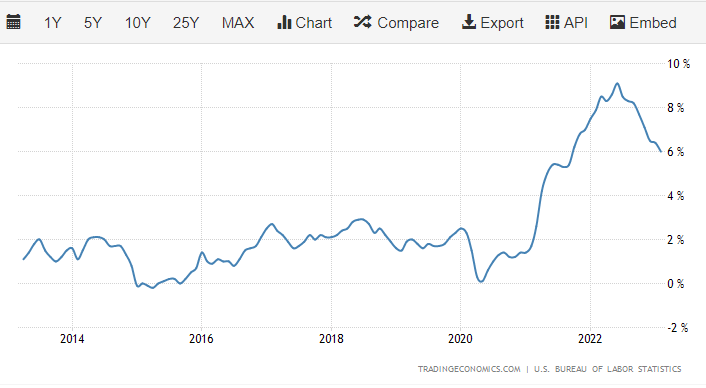
Inflation is falling slightly. But is it definite? Source
But many other investors, economists and business people expect further increases. The problem is that no one actually agrees whether this is a good thing or a bad thing. Both groups are vocal, both groups have compelling arguments, and both groups are pushing FEd, which is certainly not in an easy situation.
What does raising rates mean?
Federal Reserve rate hikes typically affect the economy and investment in the following ways:
- Higher interest rates mean higher returns on interest-bearing assets such as bonds, deposits or certificates of deposit. This attracts more capital into these instruments and raises their prices. Conversely, the prices of riskier assets such as shares may fall.
- Higher interest rates also increase the cost of borrowing. This can slow the mortgage market and consumer credit. Household demand for financing real investment may fall.
- Higher interest rates make financing more expensive for companies, which can squeeze profits and slow corporate investment. On the other hand, a stronger dollar may improve profits.
- Overall, a slowdown in consumption and investment growth may lead to a slowdown in economic growth. Sectors mainly dependent on credit, such as housing, retail and automotive, may be negatively affected.
- Conversely, slow rate hikes may have the opposite effect and support the post-recession recovery. Low interest rates allow cheap financing and encourage more spending and investment.
In principle, the Fed's interest rate hikes slow the economy slightly, while its rate cuts have a stimulative effect. These are usually gradual steps and the overall impact depends on the amount of change and the economic cycle.
In your opinion, are the Fed's current actions the right ones? Should it behave differently?
Disclaimer: This is by no means an investment recommendation. It is purely my summary and analysis based on data from the internet and other sources. Investing in the financial markets is risky and everyone should invest based on their own decisions. I am just an amateur sharing my opinions.