
Tesla’s most polarizing vehicle has officially begun its journey beyond North America. The company has started customer deliveries of the Cybertruck in South Korea, marking a milestone moment for both Tesla and one of the most competitive EV markets in Asia. The launch signals that Tesla sees real global potential in a model that was long assumed to be tailored almost exclusively for U.S. roads and consumer tastes.
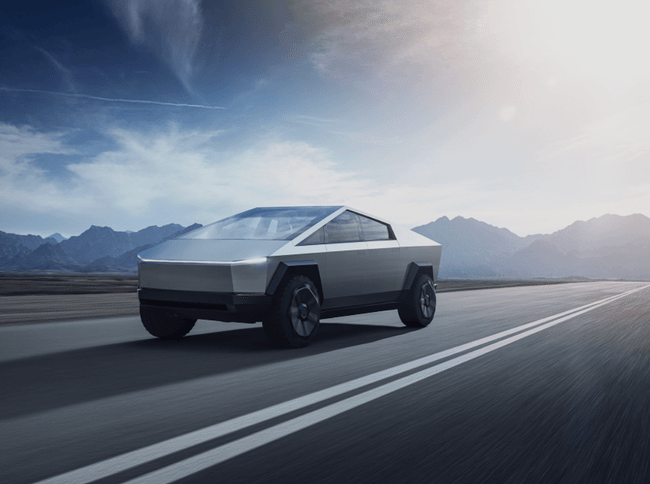
The first units were handed over on November 27, accompanied by a large community event and an explosion of social-media activity. For Tesla, South Korea is more than a test market—it is a strategic proving ground for whether the Cybertruck’s design, performance and brand pull can resonate beyond Western markets. If the debut proves successful, it could accelerate Tesla’s plans to bring the Cybertruck to other regions, with Australia emerging as the next likely stop.
Cybertruck In Korea: two versions and a price that targets the premium segment
In South Korea, the Cybertruck is offered in two configurations:
- AWD - equivalent to A$151,700 (US$100,100)
- Tri-motor "Cyberbeast" - equivalent to A$167,300 (110,400 USD)
The variants differ not only in power, but also in driving dynamics and capability.
The AWD version has:
- twin-motor drive
- 123 kWh battery
- 0-100 km/h in under 4.5 seconds
- over 520 km of EPA range
- up to 5 tonnes of towing capacity, which is of specific interest to Korean owners looking for the practical side of this otherwise extravagant truck
On the other hand, the high-end Cyberbeast pushes the limits further: accelerating to 100 km/h in 2.7 seconds and reaches a top speed 210 km/h - figures that are almost absurd for a pick-up truck.
NHTSA gives five stars and an exceptional safety record
According to data presented by Tesla $TSLA, the Cybertruck in Korea comes with a 5-star safety rating derived from US NHTSA tests.
NHTSA states that the Cybertruck has:
- Lowest likelihood of injury of all pickup trucks tested
- lowest rollover risk - 12.4%
- Very strong cab structure thanks to the stainless steel "exoskeleton" architecture
For customers in Asia, where safety is often a key parameter when choosing an EV, this is an important consideration.
Australia is waiting for a right-hand drive version - and Tesla may soon deliver it
In Australia, Tesla has exhibited the Cybertruck at a large number of EV trade shows over the past year and a half. Several showrooms have even had it permanently on display - most recently on the Gold Coast in Queensland.
This has fuelled speculation that a right-hand drive version is already in developmentand that Australia may be one of the next markets with real distribution. Given that South Korea has now been given priority, it's clear that Tesla already has the global distribution logistics in place for the Cybertruck.
Sales reality: interest yes, numbers no
Despite all this, Cybertruck has its problems. It was expected to be a sales blockbuster that would disrupt the US pickup segment - but the reality is more tempered.
In the last quarter, Tesla sold:
- 5,385 units Cybertrucks
- about 16,000 units since the beginning of the year
What caused the weaker results?
- Production shortfalls
- more than ten public recalls in two years
- a slump in demand after the end of the federal tax credit for EVs
- complications with service and parts supply due to the Cybertruck's specific design
So how stable production is and how Tesla manages to curb the problems that have hampered its North American launch will be critical to entering new markets.
What entering the South Korean market means for Tesla
For Tesla, it's not just about further geographic expansion - South Korea is one of the world's most demanding and tech-savvy automotive markets. It is home to brands that dominate the entire EV segment (Hyundai, Kia), and is also one of the countries with the highest proportion of EVs per capita. If the Cybertruck succeeds here, it will be an important signal to Tesla that the model can work outside the US, where it relies on very different consumer behavior.
South Korea is specific in several ways: customers prefer technological superiority, demand quality service infrastructure and respond quickly to mobility trends. Tesla therefore uses this market as a testing laboratory for its global ambitions. Success here could accelerate Cybertruck's entry into other Asian markets that are watching Korea's moves closely - Singapore, Hong Kong and Australia, for example.
Key reasons why Korea is a strategic milestone:
- High EV penetration per capitawhich enables rapid adoption of new models
- an extremely technology-oriented populationthat values innovation
- strong domestic competitionagainst which Tesla can distinguish itself with unusual design and performance
- a market that quickly creates trends in the rest of Asia
So Tesla is not throwing itself into an easy environment - it is entering an arena where the decision is being made as to whether the Cybertruck can be a global product or remain an American specialty.
How Cybertruck fits into Korea's infrastructure
From an infrastructure perspective, South Korea is one of the best-suited nations for modern electric vehicles. However, that doesn't mean that the Cybertruck doesn't have challenges ahead - especially because of its size and specific design. Urban centers like Seoul or Busan have narrower streets, smaller parking bays and stricter limits for large vehicles.
This puts the Cybertruck in contrast to the normal Korean demand for more compact SUVs. Tesla, however, believes this difference can be an advantage: The Cybertruck becomes a visual symbol of prestige and originality, not just a utilitarian choice.
Which may help its integration into Korean operations:
- A well-established network of Superchargersextended to rural areas
- advanced assistants and autonomous functionsto help manoeuvre in tight spaces
- the growing popularity of large premium SUVswhich is gradually changing customer preferences
- longer range and high efficiencywhich is important in a country with heavy highway traffic
Another factor is the adaptation of the software to local rules. Korean drivers place a strong emphasis on driver assistance systems, map-based cues, accurate road markings and integration with local apps. Here, Tesla is gradually adapting navigation, voice and safety features to make the Cybertruck feel like a full-fledged vehicle designed for Korean traffic.
It also has the advantage of Korea having one of the fastest 800V charging networks in the world. Although the Cybertruck operates on a 400V architecture, Tesla is working on adapters and optimizations that will allow it to use most public stations without power limitations.