Venezuela Re-Enters the Oil Map, but on Uncertain Terms

Geopolitics has abruptly returned to the center of the oil market narrative. Recent US actions in Venezuela have reopened a question investors had largely written off: whether one of the world’s most resource-rich countries can meaningfully rejoin global supply. In theory, the upside is significant. In practice, the path forward is slow, fragile, and politically charged.
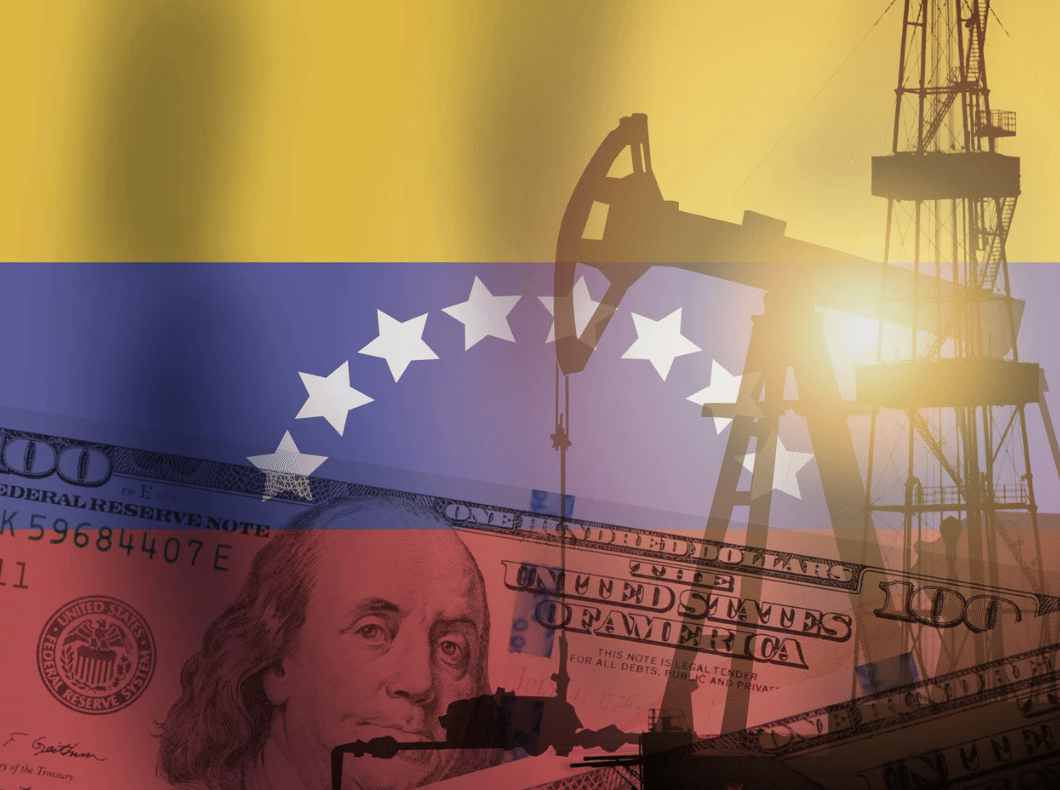
Markets are already debating the long-term implications rather than the immediate impact. Years of underinvestment, deteriorated infrastructure, and talent drain mean that any production recovery would take time and capital on a scale few are prepared to assume quickly. For oil prices, Venezuela represents not an imminent supply shock, but a latent risk factor that could reshape expectations over the coming decade.
Why Venezuela could once again affect global oil prices
The very fact that Venezuela holds the world's largest proven oil reserves makes it a potential game changer. If the political situation were to stabilise and the US actually opened the way for US firms to resume production, the market would have to start factoring in higher future supply.
Meanwhile, Goldman Sachs analysts have not changed their price estimates - they continue to expect Brent to average around $56 per barrel and WTI around $52 for this year. But they also warn that the combination of stronger production in the US, surprisingly high output in Russia and the potential return of Venezuela increases the risk of a price decline after 2027. It is this long-term outlook that is key for investors.
Who would benefit most from Venezuela's return
Paradoxically, the primary beneficiaries of a geopolitical intervention might not be oil producers, but oil services, infrastructure and upstream technology firms. Venezuela will not be able to resume production without external help, and this opens up the space for several clear winners:
Halliburton $HAL and Schlumberger $SLB - the technology and services backbone for well workovers, field maintenance and production upgrades.
Baker Hughes $BKR - compressors, turbines, power infrastructure.
US midstream companies (pipelines, export terminals) if oil starts to be exported in larger volumes again.
These companies have historically benefited from investment cycles regardless of whether oil prices are high or low because their business is based on project volume, not directly on the price of the commodity.
Who, on the other hand, might face pressure
On the other hand, Venezuela's long-term return to the market would be a negative factor for large integrated producers and especially for companies heavily tied to high oil prices. Among the most sensitive are:
While these firms have strong balance sheets, their valuations are largely based on the assumption that global supply will remain relatively constrained. Any structural increase in production after 2027 would distort this story.
Short term chaos, long term supply pressures
Prior to Maduro's detention , the US imposed a partial tanker blockade, leading to Venezuelan warehouses filling up and further supply disruptions. This is one reason why the market has not collapsed yet and Brent is holding around $60 a barrel.
But in the long run, investors need to start working with the idea that oil may no longer remain a structurally scarce commodity if the geopolitical map is truly rewritten and capital returns to regions that have been off the table for decades.
What investors should take away from this
Venezuela is not a short-term trade catalyst, but a five- to ten-year strategic story. If the ambitions of Washington and US energy companies are realised, it will be one of the largest investment projects in global oil infrastructure. But in terms of shares, this does not mean "buying oil", but carefully distinguishing between producers and the companies that profit from rehabilitation, servicing and construction.
Oil as a commodity may face pressure. Energy services and infrastructure, on the other hand, face a potentially very long investment cycle.