


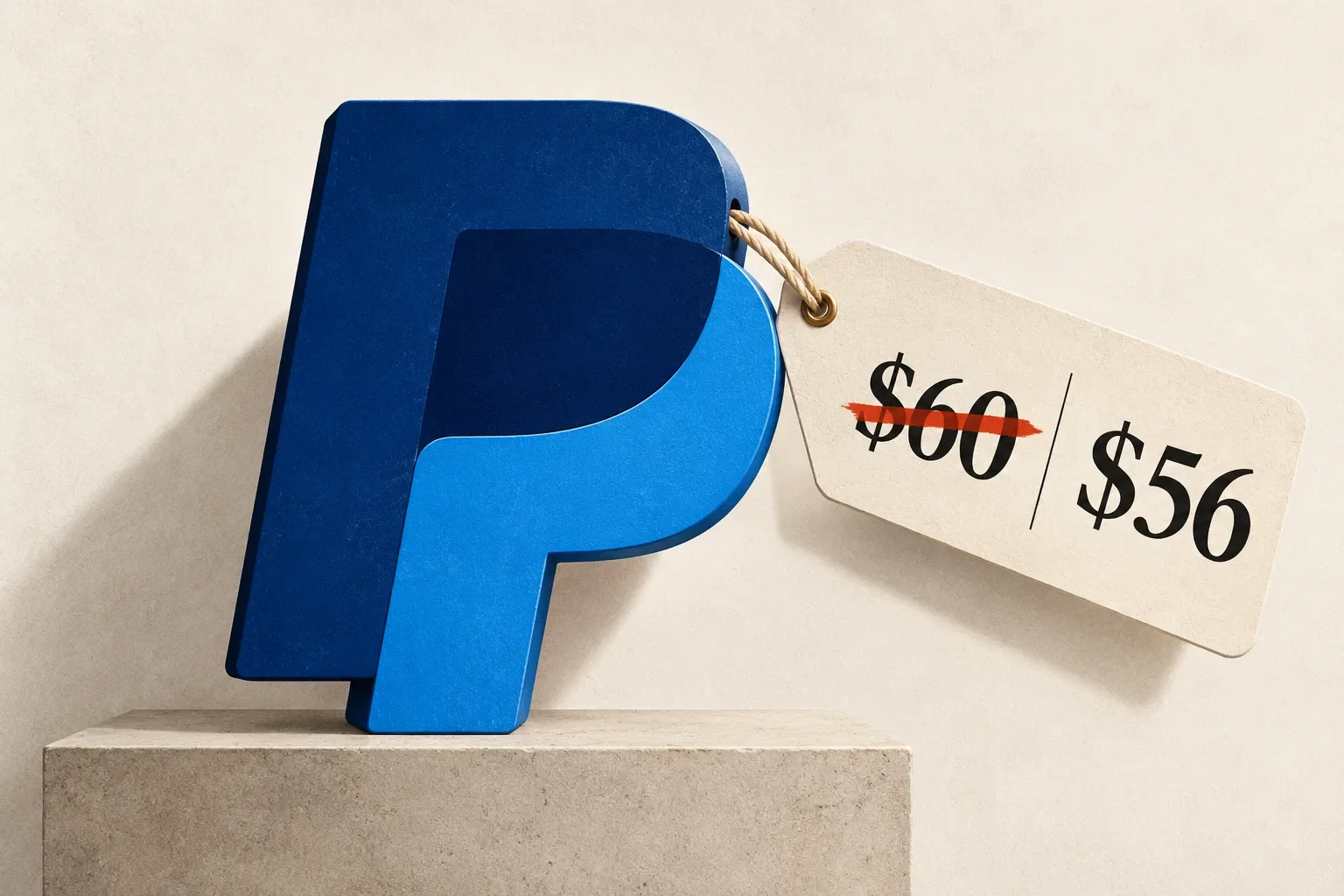
PayPal rejected $60 per share. Today it’s worth $56. Who got it wrong?

The board called an offer of $60.50 per share too low this year. The market is paying less today. Earnings per share are rising, net income is falling, and a single number that most investors aren’t tracking will decide who got it wrong.
Key points
The board rejected an offer of $60.50 per share this year; today the market is paying $56.09.
Earnings per share rose 8%, while net income fell 14% in the same quarter.
PayPal’s most profitable business has grown at a rate of 1% to 2% for four consecutive quarters.
Bulios’s fair value is $74.51, while the consensus of 70 analysts lands exactly on today’s price.
One number in the results that most investors aren’t tracking will decide who got it wrong.
The buyer offered $60.50. The market says $56
In mid-July, PayPal $PYPL received an offer unlike any fintech had ever received. A consortium of Stripe and Advent International offered $60.50 per share in cash, or roughly $53 billion, a 28% premium to the share price at the time. The board called the offer inadequate. After six weeks of negotiations, the consortium walked away on August 28, and the stock lost nearly 13% that day.
Then came October 27. PayPal beat earnings estimates, raised its full-year outlook, and the stock closed at $56.09, up 2% from the previous day. That’s still 7% less than the buyer the board dismissed as a cheapskate was offering. The market cap is $48 billion; the offer was for $53 billion.
The valuation reflects that. The stock trades at 9.8 times earnings, while the company’s five-year average is 27.2. That’s how consumer finance companies are valued, not a global payments platform. The consensus price target of 70 analysts is $56.56, exactly where the stock stands today. Wall Street sees no upside, the board saw a value well above $60, and the buyer saw something in between. Three parties, three prices; only one can be right.